
About the Book
Carrie’s Children: How One Mother Prepared Her Children to Become Selma’s Foot Soldiers
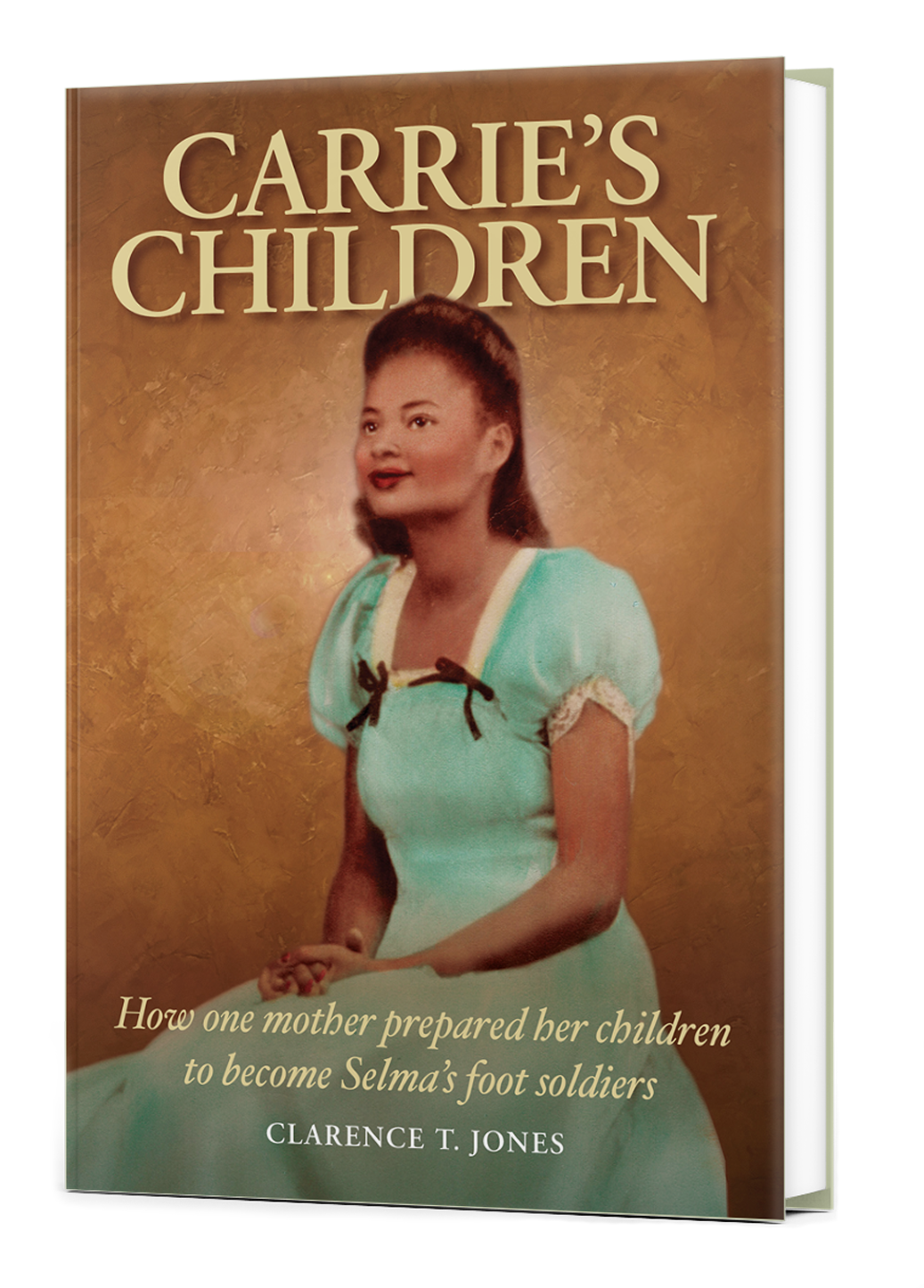
At 1421 Sylvan Street in Selma, Alabama, Clarence and his brother Frederick clipped their ducks' wings each year to keep them safe inside the fence. Their mother, Carrie Louise Lundy, took the opposite approach with her nine children—she was building wings strong enough to carry them anywhere courage required them to go.
Carrie learned strength from her mother Hettie, who raised her children at Green Street Baptist Church with dignity and purpose. Working as a nurse, lab technician, and midwife — literally bringing new life into Selma's Black community—Carrie built radical trust into her children through daily responsibility. She sewed their dress clothes, and school uniforms on her Singer machine, taught them to cook and care for each other, and chose Saint Elizabeth Catholic School for their education, valuing the rigorous spiritual and academic formation the Sisters of Saint Joseph provided, even as she remained faithful to her own Baptist tradition.
But Carrie's story begins with an absence that shaped everything. Her husband, Clarence Sr., had served in World War II as an ammunition truck driver, survived, and married Carrie in July 1946. Like thousands of Black veterans, he traveled north seeking work that Alabama denied him. What he found in Cleveland wasn't opportunity but economic displacement that made returning impossible. The distance between Cleveland and Selma became unbridgeable not by miles but by systems designed to keep Black families separated. Carrie would raise her children knowing their father loved them but couldn't reach them.
When civil rights organizing intensified just three blocks from their home at Brown Chapel AME Church, Carrie's children attended mass meetings, participated in sit-ins, and marched both Selma to Montgomery marches, including Bloody Sunday. They were ready not because of a dramatic parental decision, but because Carrie had been preparing them for courage all along.
Carrie's Children is written by Carrie's eldest son, Clarence, who participated in the movement as a child and now brings an engineer's precision and a technical writer's clarity to documenting his mother's extraordinary approach to raising children. This is memoir, but not of movement participation—it's memoir of witnessing a parenting philosophy that prepared children for history itself.
The book follows three generations: Hettie, who built the foundation; Carrie, who practiced radical trust; and the children, who demonstrated what that preparation produced. Written in third person to create the necessary distance for observation and documentation, it reveals what history books miss—that Carrie's parenting approach mattered as much as the marches themselves.